The Martian wind whispers secrets, doesn't it? It’s a silent, ancient voice, carrying tales from billions of years ago, and right now, that voice is getting louder, clearer, urgent. Just when you think we’ve reached a new peak of discovery, Mars throws another curveball, another glittering gem, another undeniable whisper of what once was, and what could still be.
Take "Phippsaksla," for instance. Sounds like something out of a sci-fi epic, right? It’s not. It’s a shiny metallic rock, a meteorite, sitting there on the mars surface, a cosmic calling card discovered by our tireless mars rover, Perseverance. Perseverance rover spots mysterious 'visitor from outer space' rock on Mars surface after 4 years - Fox News SuperCam tests screamed high iron, high nickel—a true space wanderer, forged in some ancient asteroid belt. And while finding meteorites on the mars planet isn't entirely new (Curiosity snagged "Lebanon" and "Cacao" years back), each one is a tangible piece of the solar system, a reminder of the violent, beautiful ballet of planets forming.
But that’s just the appetizer, my friends. The real heart-stopper? Perseverance, our $2.7 billion marvel, pulled a sample from "Cheyava Falls" in March 2024. And what did it find? Potential biosignatures. The first confident detection of organic matter. When I first read that, I honestly just sat back in my chair, speechless. Think about that for a moment: organic matter on Mars. It's not proof of little green men, not yet, but it’s the building blocks, the tantalizing breadcrumbs leading us down a path we’ve dreamed of for generations. This isn't just about rocks and dirt; this is about the profound, universal question of life on mars, a question that echoes through every human who’s ever looked up at the night sky.
The Universe is Calling, Are We Listening?
And it gets even better. New research from NYU Abu Dhabi, published just last November, paints an even richer picture. Ancient sand dunes in Gale Crater, where water from a Martian mountain once seeped, are now known to harbor gypsum minerals. Why is this a game-changer? Because gypsum is a fantastic preserver of organic material. It means Mars wasn’t just wet and warm for a fleeting moment 3 to 4 billion years ago; it had these protected, underground sanctuaries where microscopic life could have thrived for longer than we ever imagined, a kind of subterranean oasis in a drying world, just waiting for us to uncover its secrets.
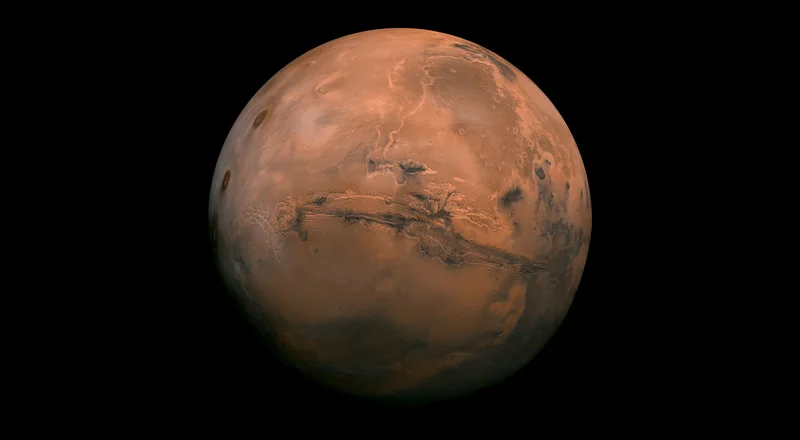
This is where the mission to bring these samples back to earth becomes not just a scientific endeavor, but a moral imperative. This isn’t just an academic exercise; it’s about understanding our place in the cosmos, about the fundamental mars facts that could rewrite our textbooks and redefine life itself. Imagine what those tubes, those tiny cigar-sized containers of Martian history, could tell us. Biosignatures, yes, but also clues to how a vibrant, watery mars planet lost its magnetic field and atmosphere, transforming into the cold, desolate world we know today. It’s a planetary cautionary tale wrapped in a scientific treasure hunt, and we're holding the map.
Navigating the Rapids of Ambition and Reality
Now, here’s where the very human, very terrestrial challenges kick in. The Mars Sample Return (MSR) mission, the grand plan to get these precious samples home, hit a wall. A big, financially unstable wall. NASA Found Something on Mars. Now We Might Just Leave It There - Scientific American NASA Administrator Bill Nelson had to postpone it in April 2024, staring down an $11 billion price tag—a cool $5 billion over budget—and a timeline stretching into 2040. Then, the Trump administration proposed outright canceling it in the 2026 budget, calling it "financially unstable." It’s a gut punch, really, to hear that kind of talk when you know what’s waiting out there.
But this isn't the end of the story. Not even close. This is where innovation, the true engine of human progress, kicks in. NASA isn't just throwing in the towel; they're actively soliciting cheaper, faster commercial proposals. We're talking SpaceX, Blue Origin, Rocket Lab—companies that thrive on disruption and audacious goals. Rocket Lab CEO Peter Beck isn't just talking, he's claiming his company could do the MSR for $4 billion by 2031. That’s a game-changer, a paradigm shift in how we approach these monumental tasks. It's like comparing the first transatlantic flights to today's commercial air travel—the initial journey was fraught with peril and expense, but innovation always finds a way to make the impossible routine, to democratize access to the extraordinary. This moment, with its budget woes and delays, isn't a failure; it’s a crucible, forging a more efficient, more collaborative future for space exploration. We’re not abandoning Mars; we're just finding a smarter way to get there and back, because the universe demands it.
Our Martian Destiny Awaits
The decision on which MSR proposal to pursue won't even be made until mid-2026, resting with the next administration. But the samples, those precious tubes, are patiently waiting. They can last for half a century. And even if we on earth falter, other nations like China, with their Tianwen-3 mission aiming for 2028, are ready to pick up the torch. But I believe in us. I believe in the insatiable human curiosity that drives us to look beyond our horizon, to ask the big questions. The whispers from Mars are getting louder, telling us tales of ancient water, of organic matter, of the very possibility of life beyond our cradle. We must listen. We will find a way to bring those answers home. The future of understanding life itself is quite literally buried in Martian dust, and it's calling our name.